Hop Aero launch film, broken down
A 52-second rocket pitch: one sentence, a mission told as a progress bar, a contract held on screen, then real fire.
- Context
- Study of Hop Aero's launch film (YC S26)
- Contribution
- Shot-by-shot analysis, sound analysis and performance ranking
- Period
- November 2026
- Explore
- Watch the original on X ↗
- views on X
- 1.2M
- likes, reposts, replies & bookmarks
- 5.6K
- of 50 ranked YC S26 launch videos
- #2
Read from X on November 7, 2026. Ranked by total engagement (70%) and engagement per follower of the poster (30%); the post came from an account with 1,472 followers. Views are X's count, not unique people.
The project
Hop Aero's launch film for Rook, its autonomous cargo rocket, was the second-best-performing YC S26 launch video on X: 1.2M views and 5.6k engagements from a 1.5k-follower account. It's a founder voice-over pitch over CG renders, a mission progress bar and real test footage. This page logs every beat, the edit choices and every sound against the picture. The film is Hop Aero's. This is an unofficial study, not made for or endorsed by them; the original plays below, embedded from X.
The company in one sentence.
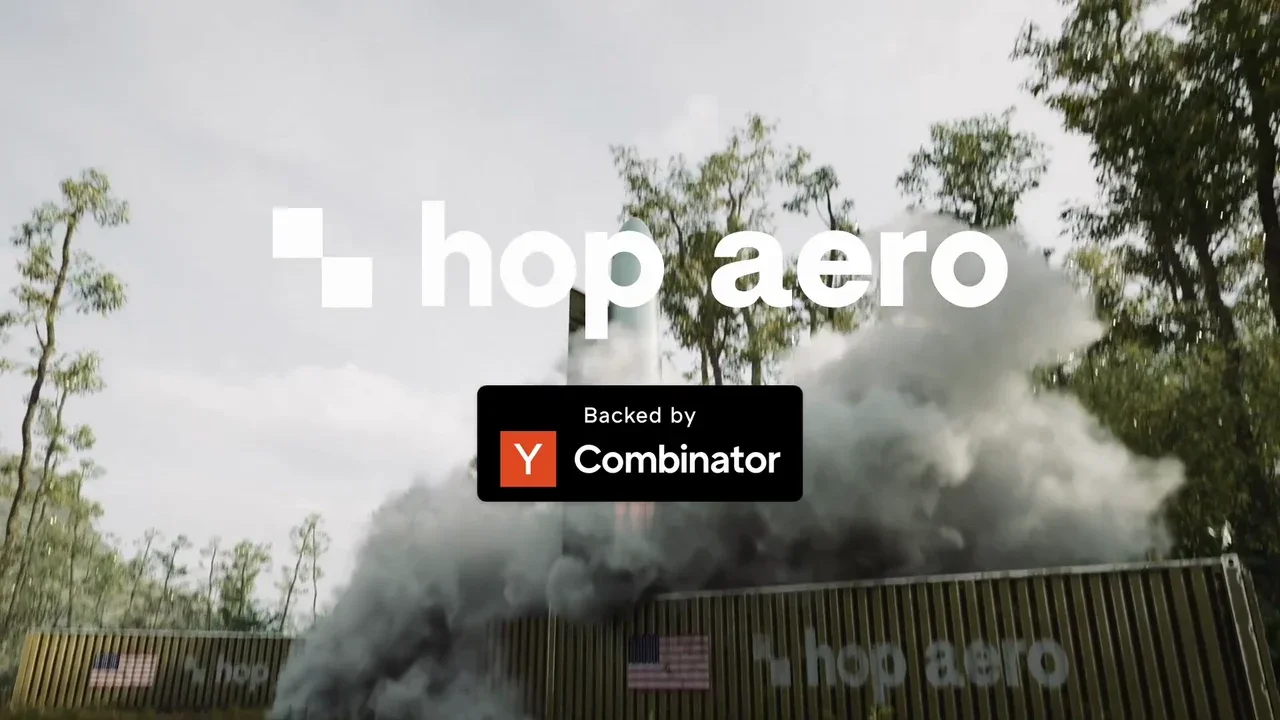
The founder's voice states the whole company in the first six seconds: rockets that deliver cargo anywhere on earth in minutes. The logo and a ‘Backed by Y Combinator’ badge stay pinned over a five-shot sizzle the whole time. Before the first explanation starts, the viewer already knows who it is, what it does and why it's credible.
A mission told as a progress bar.
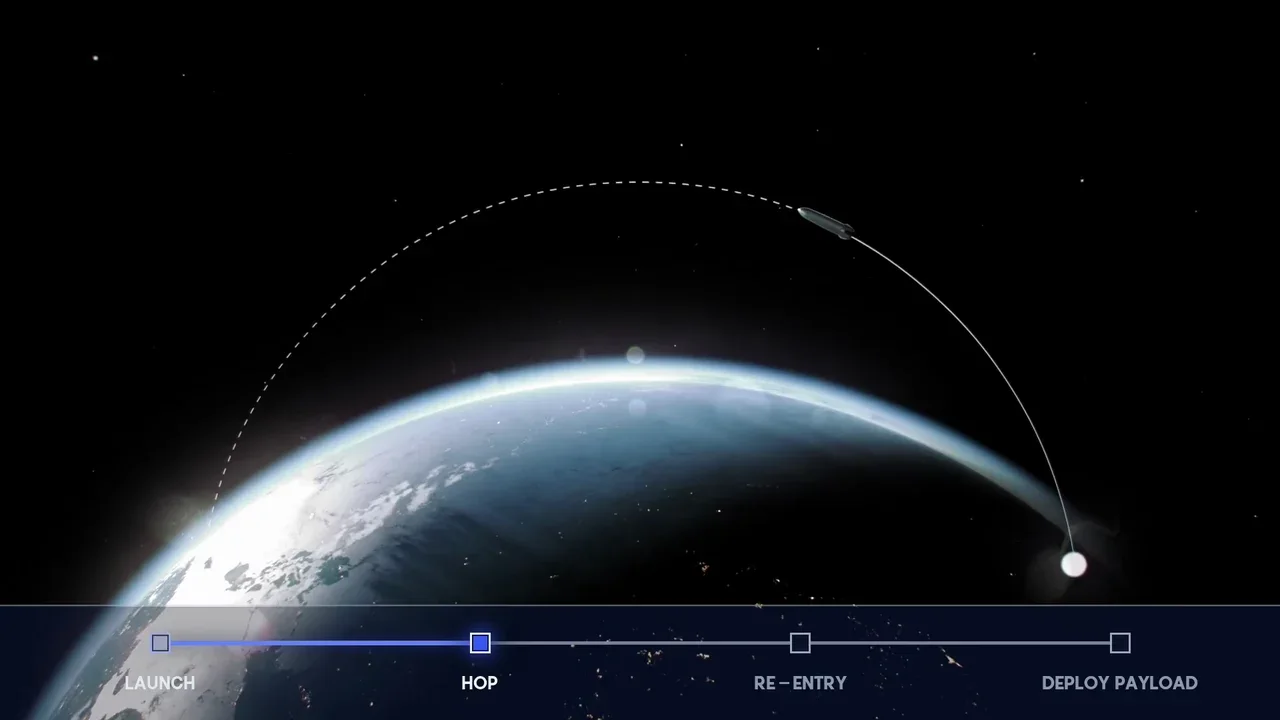
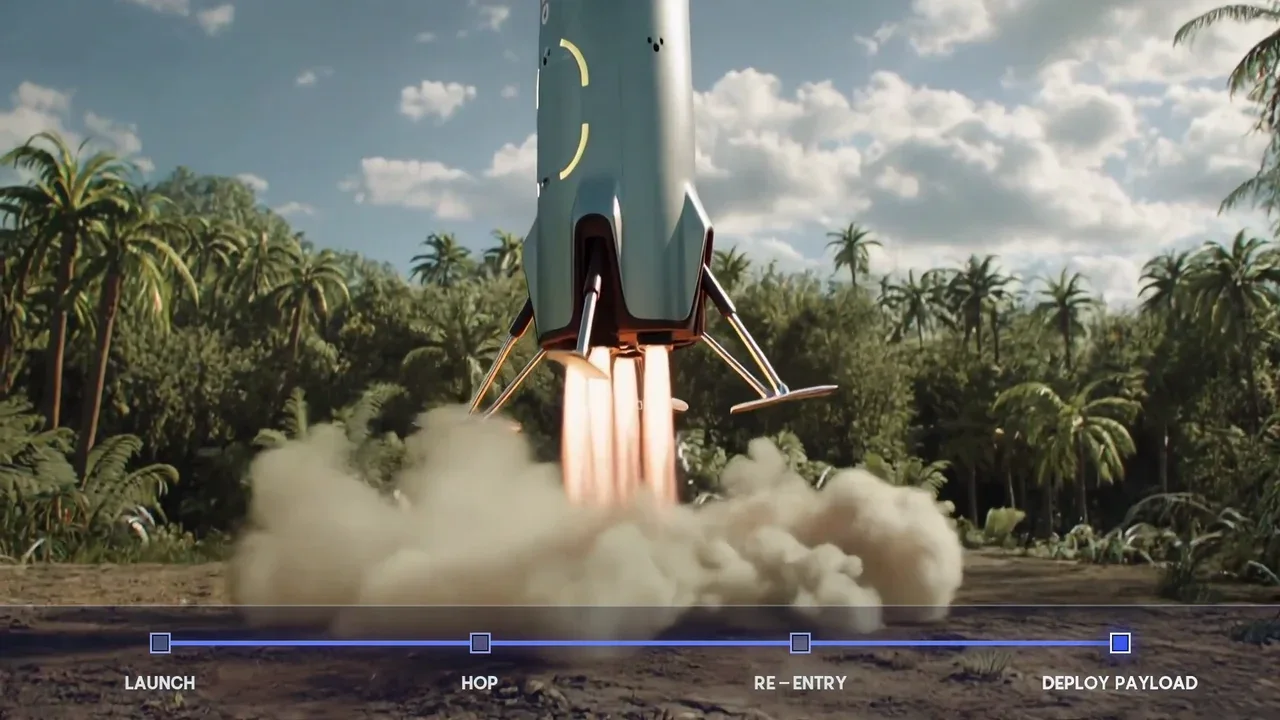
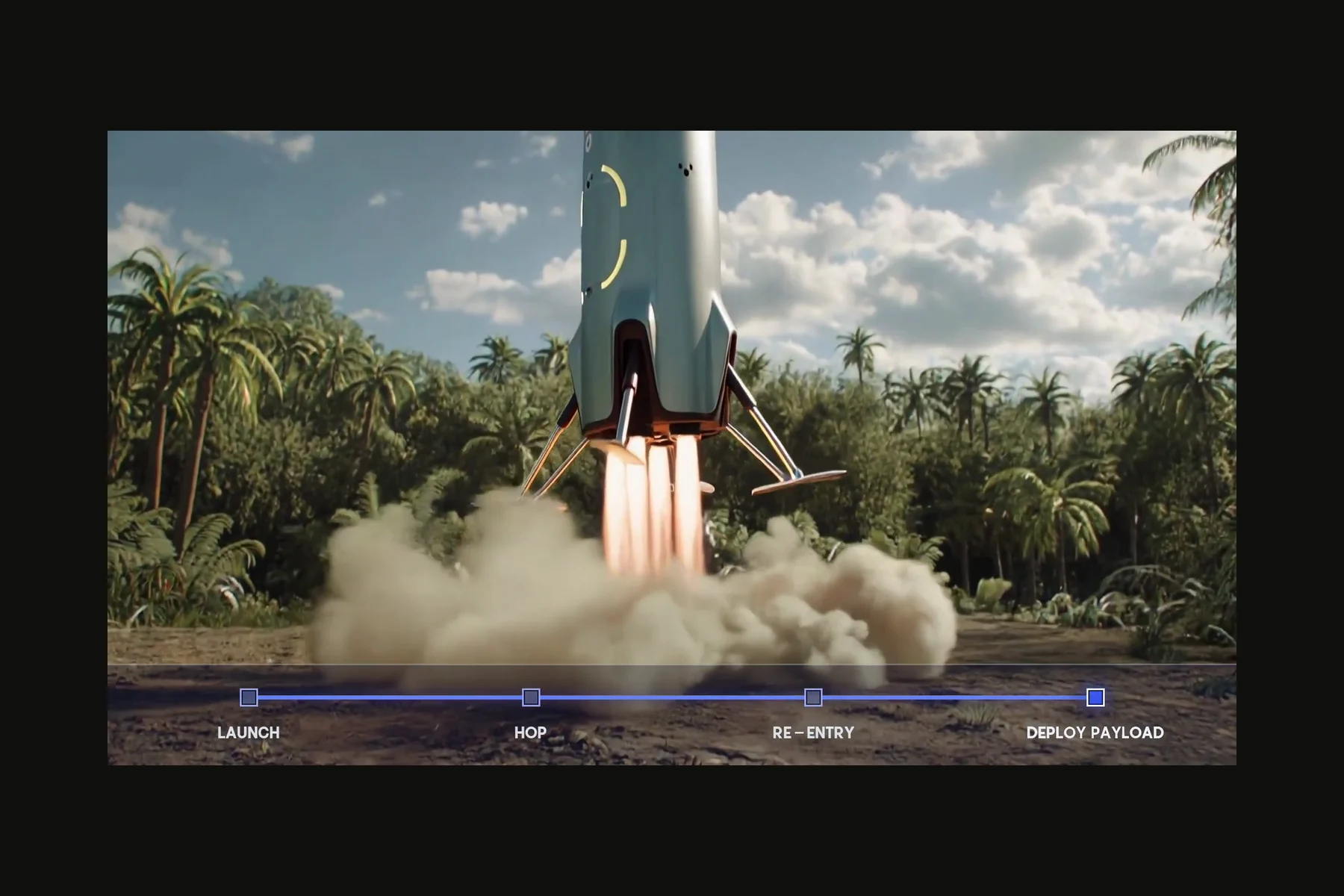
The middle of the film is one flight, shown as photoreal renders: out of a shipping container, a hop across a globe from Okinawa to Taiwan, re-entry, a vertical landing in a jungle. A small HUD along the bottom steps from Launch to Hop to Re-entry to Deploy Payload, so the sequence explains itself without title cards.
Proof gets the longest shot.
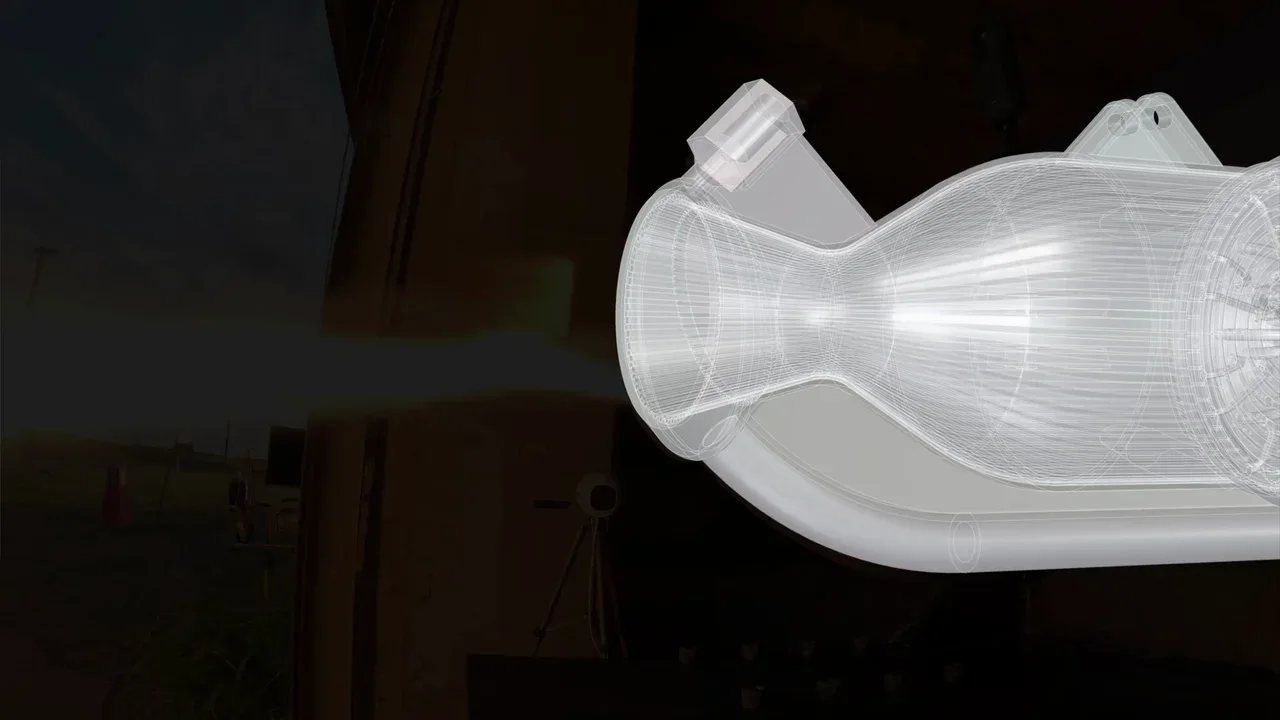
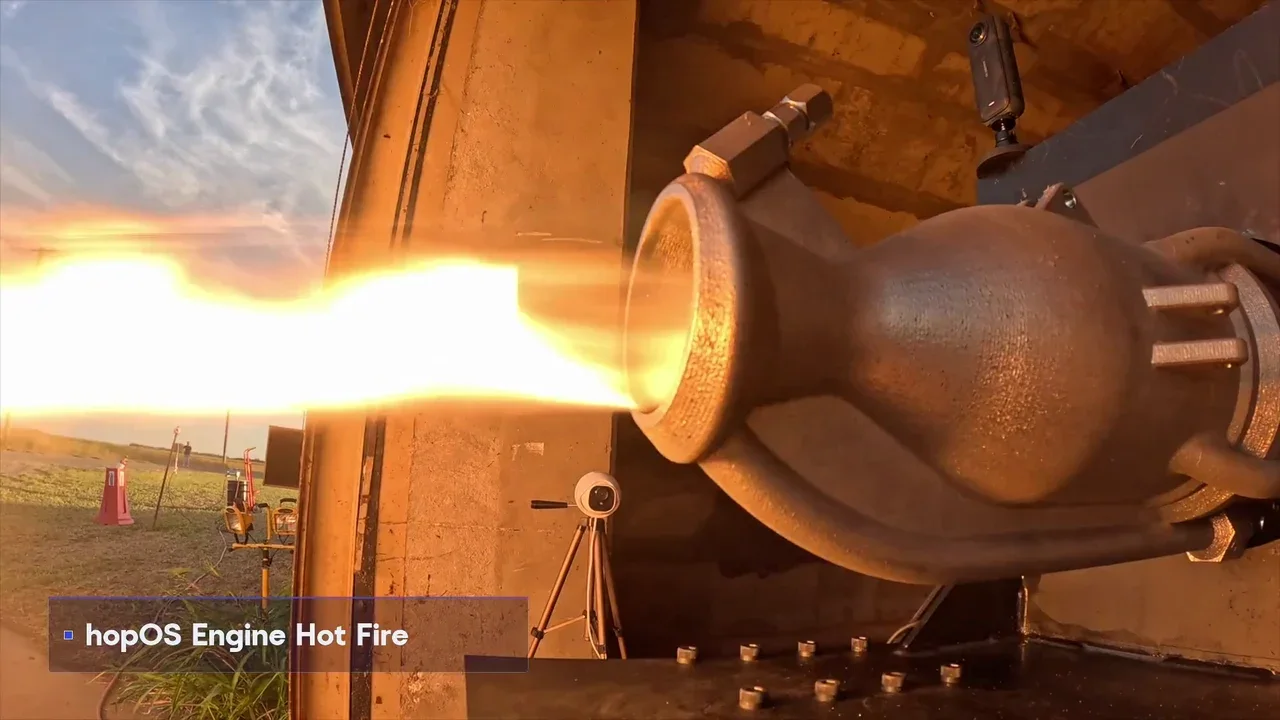
Then the film turns from vision to evidence. A flat navy card with the $1.25M Air Force contract holds for 5.5 seconds, longer than anything else. Rough handheld footage of the team follows, then a CAD render of the AI-designed engine that dissolves into the real engine firing in the same spot. Renders show the plan, and real footage shows it exists.
What it gives away.
The score is just a low drone, and the only location sound is the real hot-fire roar, which works. But the master sits at −24 LUFS, about 8 LU quieter than the feed, and there are no burned-in captions on a film that depends on its voice-over. It did 1.2M views anyway, so the idea and the visuals carried it; louder and captioned, it could have done more.
The original, from X.
Hop Aero's launch post, embedded from X: 52.5 s, logged here as 12 beats.
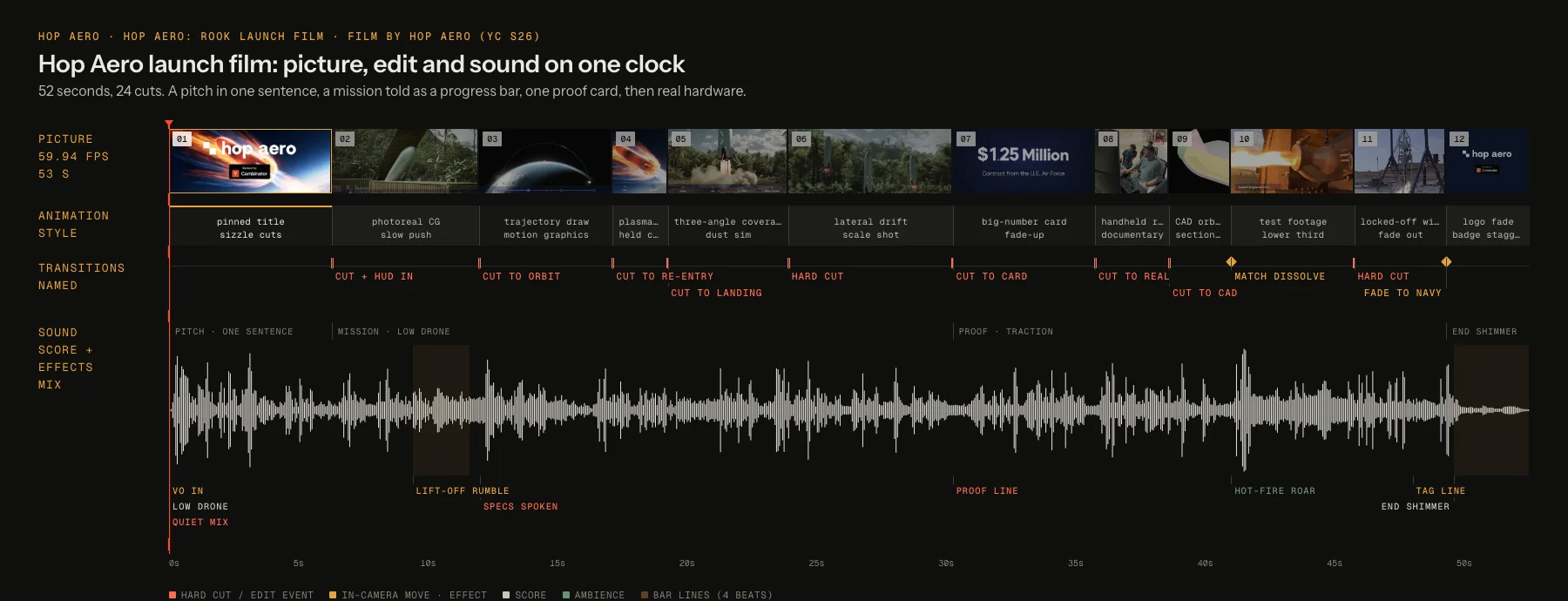
Picture, edit and sound on one clock.
Every beat, named transition and timed sound. Sound markers are placed from audio onsets, not by ear.
The moments that carry it.
Stills from the film, chosen for what they teach.