Open Intelligent UI launch film
A launch film made in a day, then written down so the next one is faster.
- Context
- CopilotKit
- Contribution
- Direction, motion, and sound
- Period
- October 2026
- Explore
- View on GitHub ↗
- from first prompt to final cut
- 8 h
- versions shared with the team
- 3
- known pitfalls covered by a plan written with the skill
- 15/15
Timings come from work-session, file and message timestamps on October 8, 2026. The skill result comes from one planning run with the skill, compared with one without; neither produced a second film.
The project
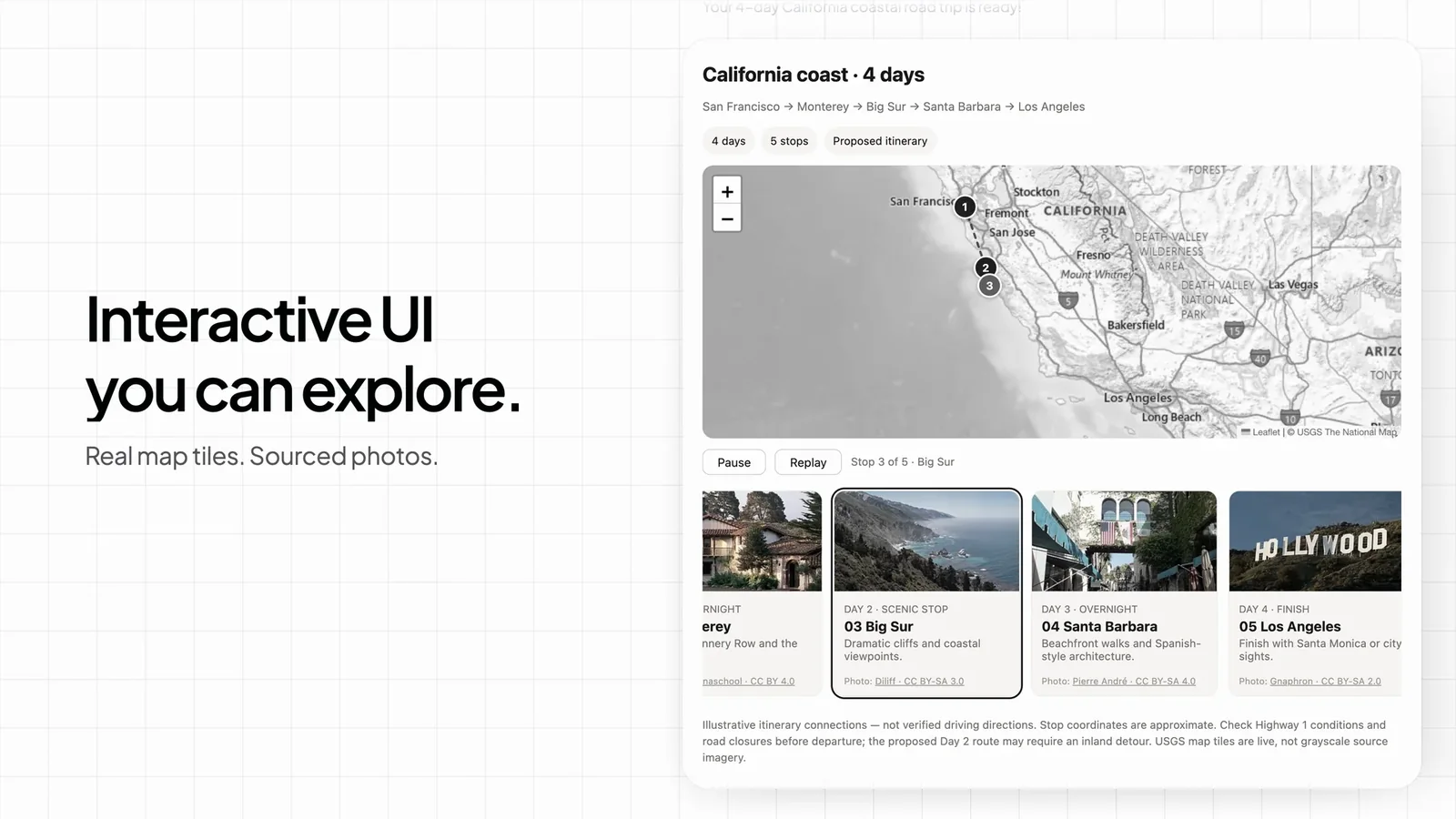
OpenGenerativeUI, the project I first built in March, relaunched as Open Intelligent UI: ask an agent in plain language and it answers with the interface the question needs. I made the launch film in one day by directing AI coding agents through capture, motion, music, and sound, then wrote the method down as a reusable skill.
Three versions in one afternoon.
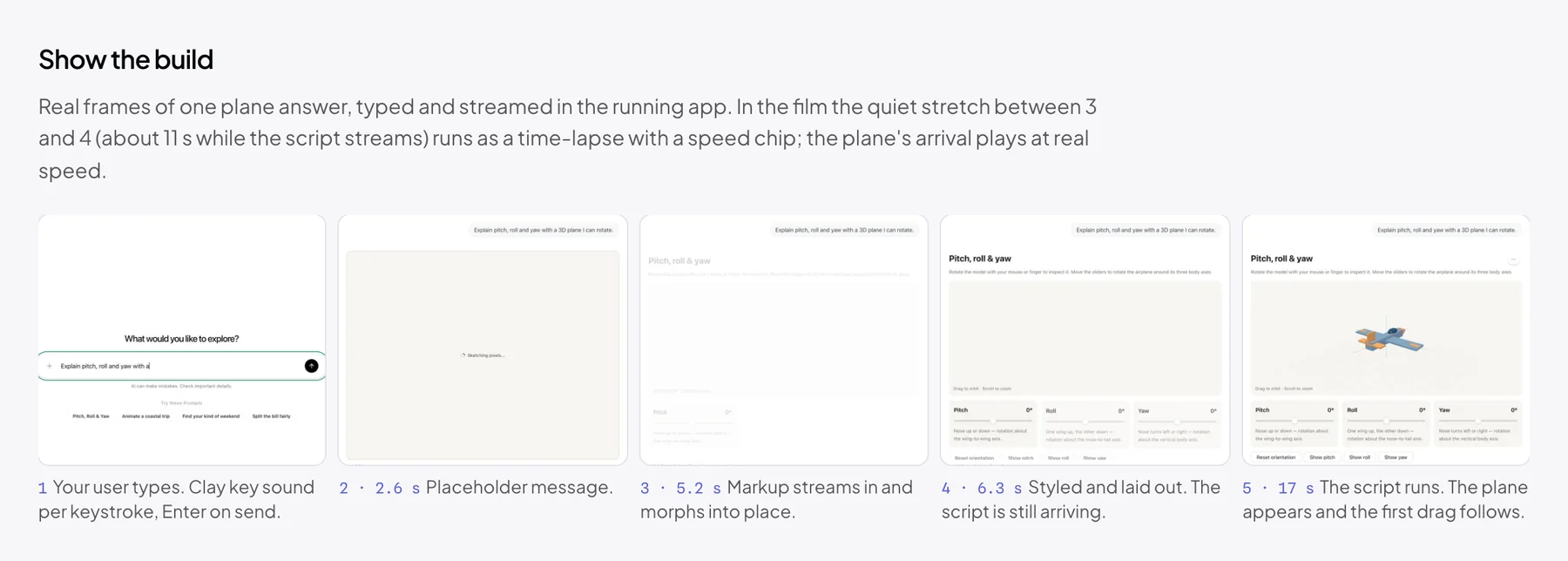
The first cut, shared about two hours in, was a 33-second screen capture of the running app. The team’s notes were specific: slow the opening, show someone typing and the answer streaming in, and replace music that felt more investigative than fun. The second version recaptured the app with typing and streaming. The third dropped the recording and drew the film in code with Remotion, recreating the app’s real answers, so timing, framing, and sharpness no longer depended on a live model.
Plain words on screen.
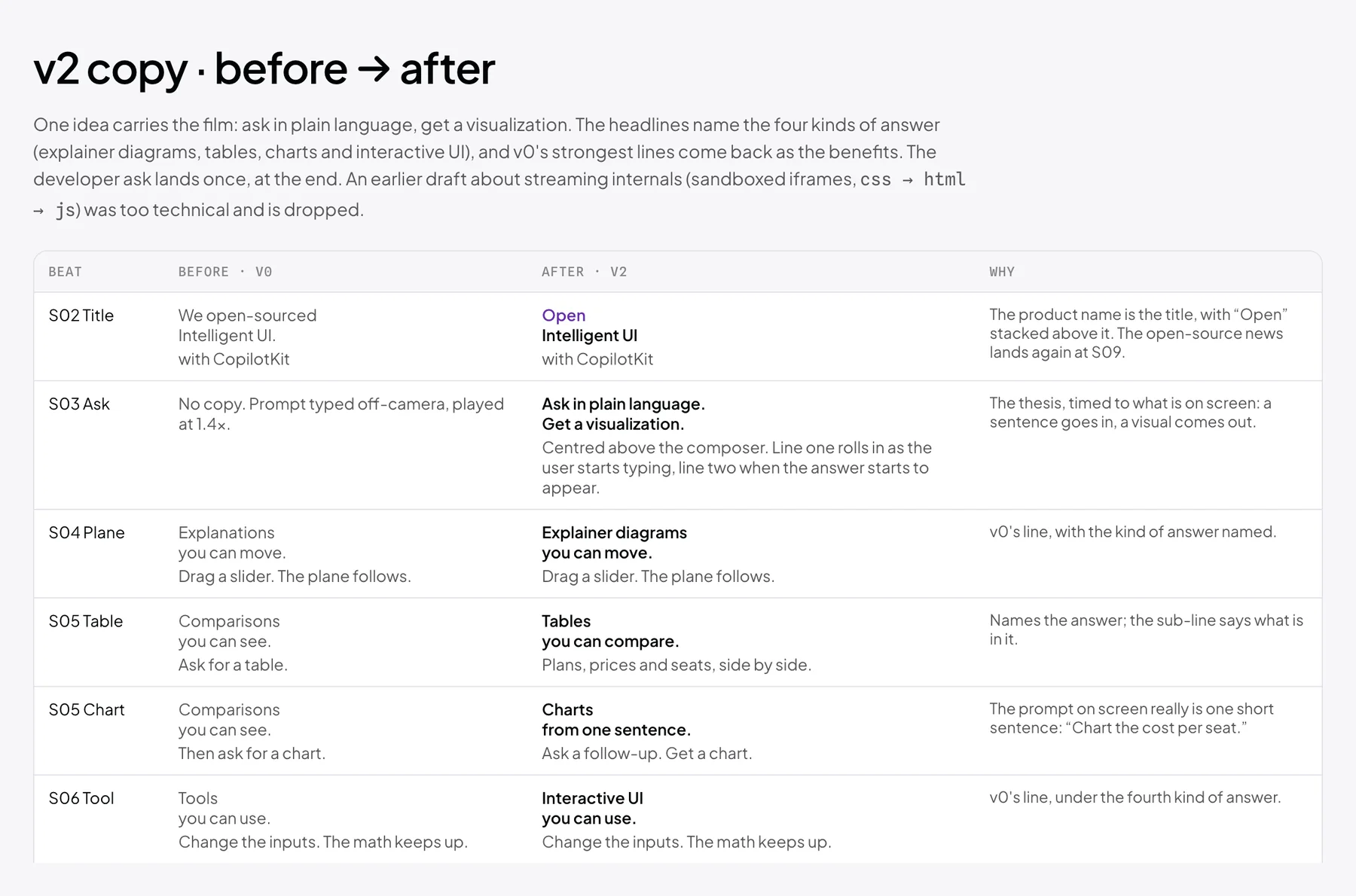
An early draft explained how the product works. The final copy says what you get. Prompts read like a person with a need (“Plan a coastal trip from SF to LA.”), headlines name the kind of answer and what you can do with it, and developers are addressed once, in the closing line: “Build Open Intelligent UI in your agents now.”
Sound chosen by ear.
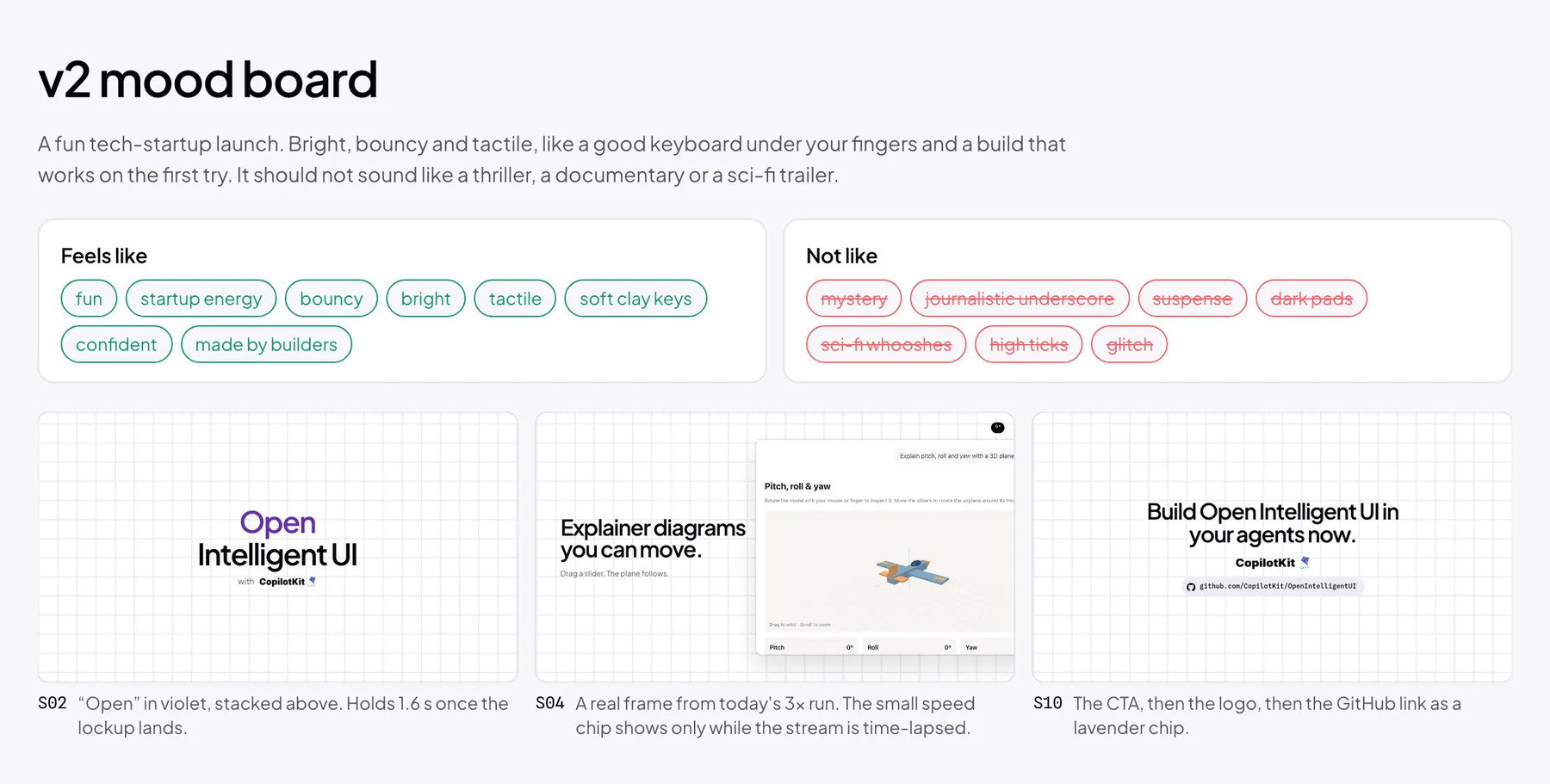
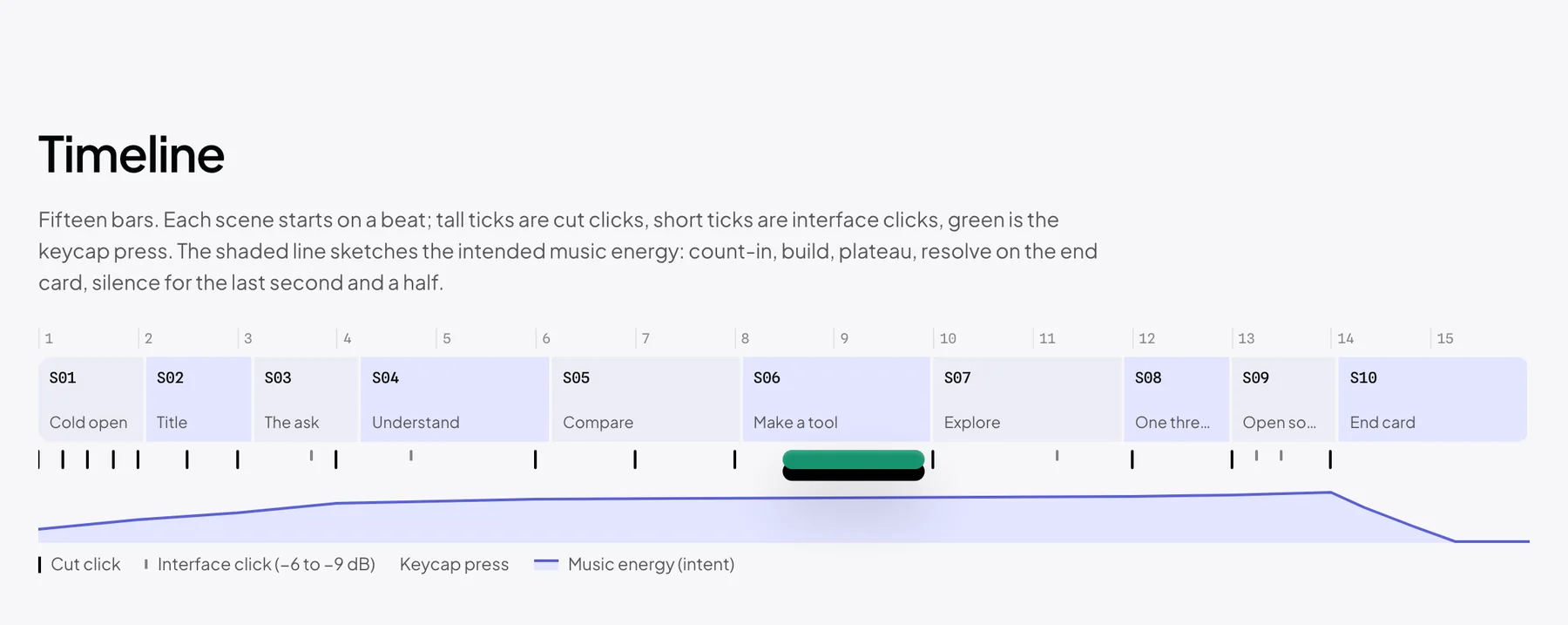
Describing the sound in words (“fun”, “techy”) produced three music directions in a row, one of which felt too commercial. What worked was a reference film whose sound we liked, measured for tempo, key, and loudness, then matched. Clicks and keys were synthesised and tuned to the score, the mix was levelled for streaming, and five typing mixes were laid over the same picture so the choice was made by listening.
Written down as a skill.
That evening I turned the method into a Claude Code skill: three approval gates (references, then storyboard and copy, then a draft with sound options), one timeline file that drives picture and sound, working templates for the capture rig, the drawn scenes, and the mix, and a review script that checks every render for jumps, freezes, and loudness. In a planning test, an agent without the skill repeated this film’s main mistakes, from one key sound per typed letter to music picked from mood words; with the skill, its plan covered all 15 problems the film actually hit.
The same beat, three times.
The plane answer as it appeared in each cut: recorded from the app, recorded again with typing and streaming, then drawn in code.
Taste agreed before footage.
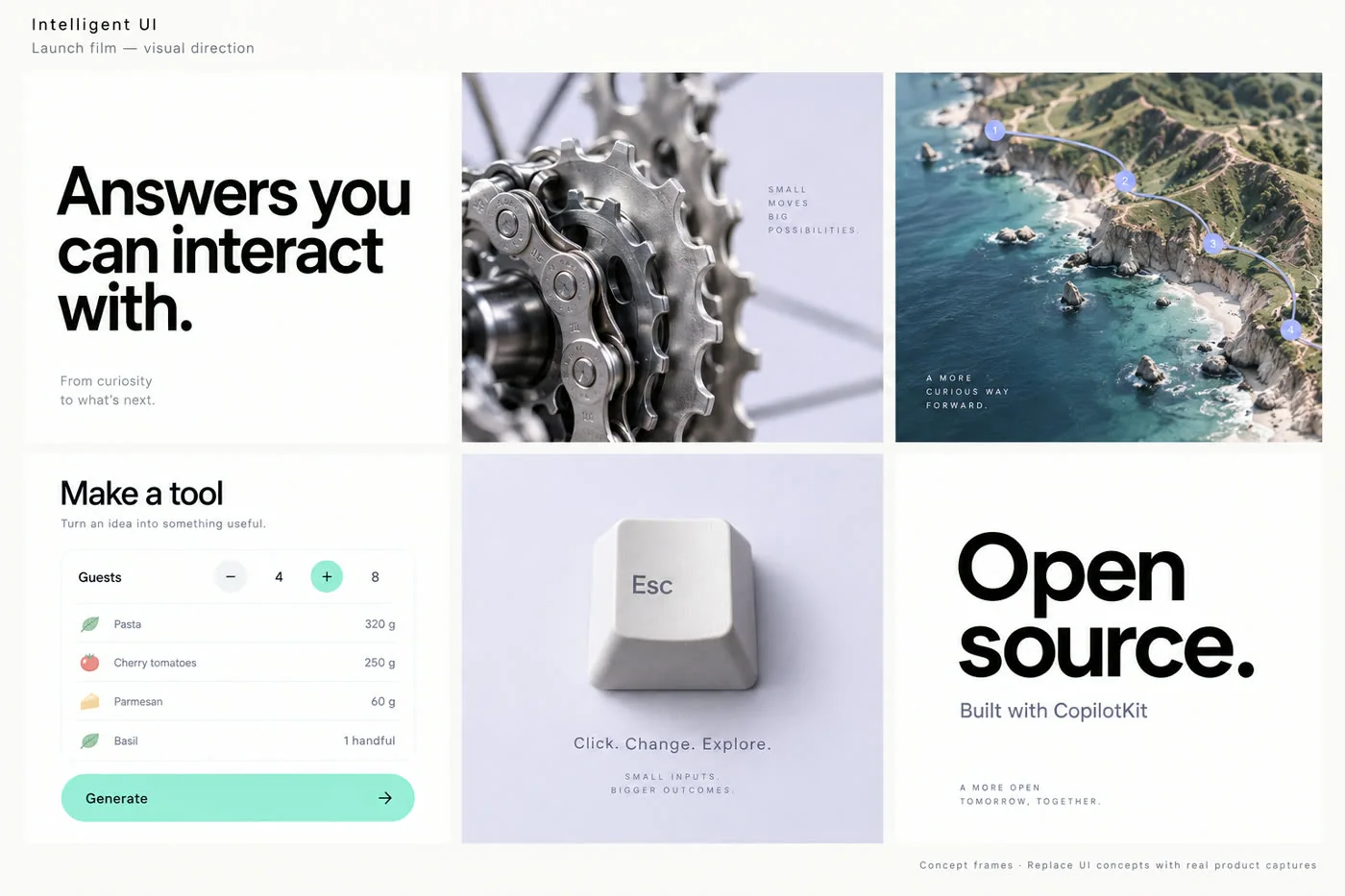
A concept board, copy table, mood board, and storyboard were approved before anything was built. The mood board’s sound direction later reversed; the visuals held.
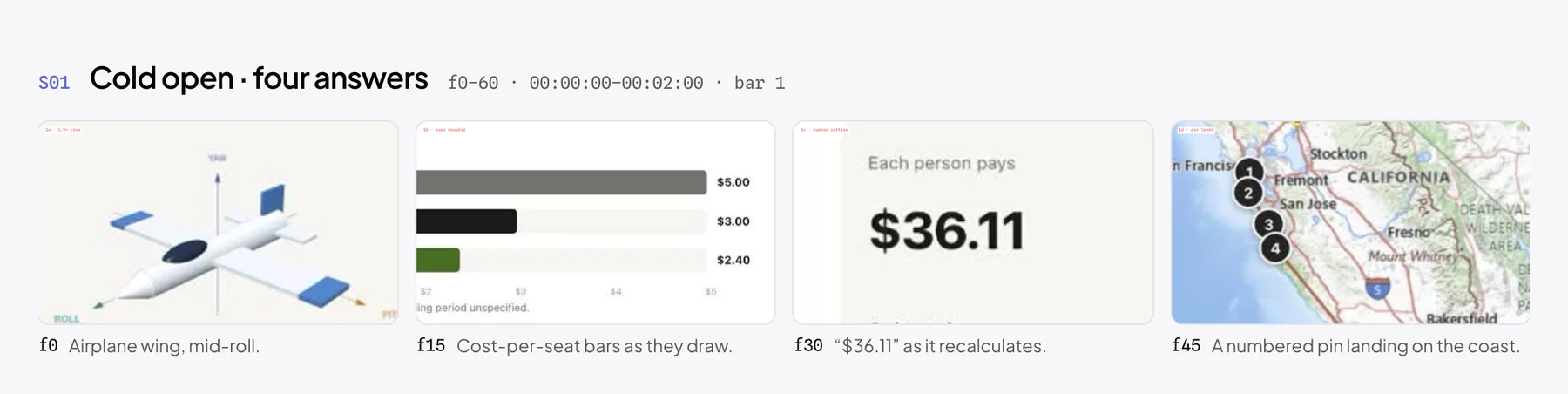
Moments from the final cut.
Typing at a readable pace, answers that build like the real stream, and a pullback over the whole conversation.